
Zero Waste Natural Laundry Detergents


Greenscents Laundry Liquid is made with organic ingredients, using soap nuts (don’t compost these as they contain natural insecticides) and shikakai pods. The formula is non-biological and free from enzymes and synthetic additives.
Use code GSENGLANDNATURALLY for 15% off entire order (minimum purchase £20)
Also in bulk form, there is also a Nonscents range. All scents are naturally derived, and items are also certified organic.
To use, just pop 4 to 5 teaspoons of liquid into the machine for a standard wash. You may need less for a quick wash, or more for areas with hard water (London, south east, Norfolk). You can also use it for hand-washing, use 20 to 25ml in a bowl of warm to hot water. Store in a cool place away from sunlight.
Choose unscented laundry powder/liquid for pregnancy/nursing, and baby clothes/bedding and pet bedding. Launder synthetic fabrics in a microfiber filter (or hand-wash in sink filters)
For stains, use natural oxygen bleach (never mix bleach with vinegar). You don’t need fabric conditioner (it usually has palm oil and makes clothing flammable when tumble-dried).
Instead, add half a cup of cleaning vinegar to rinse cycle (or half a cup of bicarbonate-of-soda to wash cycle.
How does the refill scheme work?
You can buy 500ml glass amber bottles (don’t handle with wet hands) for everyday use (and retail sale). Then you can buy refillable items in 5 litre and 20 litre containers.
Just return empties for sanitising and reuse, as simple as that! You can buy bundle sets to save money, with the refills included with your first order.
Use with one-time purchase pumps for easy use and refilling.
The benefits of refillable laundry liquids
Refillable laundry liquids are becoming increasingly popular as people look for simple ways to make everyday household routines more sustainable. Instead of buying a new detergent bottle each time the product runs out, refill systems allow you to keep and reuse the original bottle while purchasing a larger container of laundry liquid.
Here are some of the main benefits.
Less plastic waste
Traditional laundry detergents are often sold in plastic bottles that need to be replaced regularly. With a refillable system, the same bottle can be used repeatedly.
Over time, this can significantly reduce the number of detergent bottles a household needs to purchase and dispose of.
Reduced packaging
Larger refill containers generally use less packaging relative to the amount of detergent they contain. For example, instead of buying several small bottles, you can purchase one larger refill and use it to replenish your everyday bottle.
More convenient
Once you have a refill container at home, you do not need to buy a new bottle every time your detergent runs out. You can simply refill the bottle and continue washing.
For busy households, this can make laundry shopping easier and reduce the number of household essentials that need to be remembered during supermarket trips.
Can be more economical
Refills can sometimes offer better value than repeatedly purchasing smaller bottles. Although the initial cost of a larger refill may seem higher, the price per wash or per litre can be more competitive.
Buying larger quantities can therefore make financial sense for households that use laundry detergent frequently.
Less household clutter
A refill system can also help keep the laundry area more organised. Instead of having several empty or partly used detergent bottles, you can have
Where to recycle toxic laundry products
You can recycle empty bottles at kerbside. For products leftover, don’t pour down drains, take them to your council’s hazardous waste department.
Allavare is a beautiful little brand, which keeps things simple. By only offering three products. And although you can buy them separately, it makes sense to buy the affordable starter bundle which gives enough laundry powder and oxygen bleach for 60 washes, a stain removal bar and a laundry guide.
Then you can just top up as and when, either ordering one product or three, as one purchase or on subscription.
Each batch carefully mixed from natural ingredients, it’s unscented and in a recipe that has been used by generations to keep clothes clean. It only contains four ingredients:
- Coconut oil (to naturally clean and soften)
- Sodium carbonate (washing soda, to boost cleaning and soften water)
- Sodium percarbonate (a chlorine-free alternative to bleach, with lifts stains using the powder of oxygen)
- Sodium gluconate (a salt that prevents residue.
Choose unscented laundry powder/liquid for pregnancy/nursing, and baby clothes/bedding and pet bedding. Launder synthetic fabrics in a microfiber filter (or hand-wash in sink filters)
For stains, use natural oxygen bleach (never mix bleach with vinegar). You don’t need fabric conditioner (it usually has palm oil and makes clothing flammable when tumble-dried).
Instead, add half a cup of cleaning vinegar to rinse cycle (or half a cup of bicarbonate-of-soda to wash cycle.
How to use Allavare laundry powder
This laundry powder works in all kinds of water (hard or soft, just adjust the amounts). To use:
- Add 1 tablespoon to the washing machine drum
- Dissolve in warm water, before washing by hand.
Use with Bette’s stain bar soap
Bette’s Stain Bar is made using coconut oil and comes wrapped in paper packaging. Just wet the stained area and rub the damp bar on the stain, and massage into the fabric. Rinse and wash item.
You can also use this bar for household cleaning. Lather with a damp plastic-free cloth or sponge, then use it to clean dishes, sinks and kitchen surfaces. Rinse with warm water.
Why just four ingredients?
Where to recycle toxic laundry products
You can recycle empty bottles at kerbside. For products leftover, don’t pour down drains, take them to your council’s hazardous waste department.
Hand wash garments with Allavare laundry powder
Bio-D fragrance free laundry liquid is the brand you’re most likely to find in health shops and farm shops, sold with refills and bulk options.
You can also buy as laundry powder in brown paper bags. Also in larger 1kg bags.
Choose unscented laundry powder/liquid for pregnancy/nursing, and baby clothes/bedding and pet bedding. Launder synthetic fabrics in a microfiber filter (or hand-wash in sink filters)
For stains, use natural oxygen bleach (never mix bleach with vinegar). You don’t need fabric conditioner (it usually has palm oil and makes clothing flammable when tumble-dried).
Instead, add half a cup of cleaning vinegar to rinse cycle (or half a cup of bicarbonate-of-soda to wash cycle.
Why choose fragrance-free laundry liquid?
Walk down the laundry aisle and you’ll find detergents in a huge range of scents. From floral fragrances to fresh linen and citrus, heavily scented products are everywhere.
But fragrance isn’t essential for getting clothes clean. Its main purpose is to leave a particular smell behind after washing.
Choosing a fragrance-free laundry liquid can therefore be a way of simplifying your routine. Instead of masking odours with perfume, the focus is simply on cleaning your clothes.
Why choose fragrance-free laundry liquid?
Where to recycle toxic laundry products
You can recycle empty bottles at kerbside. For products leftover, don’t pour down drains, take them to your council’s hazardous waste department.
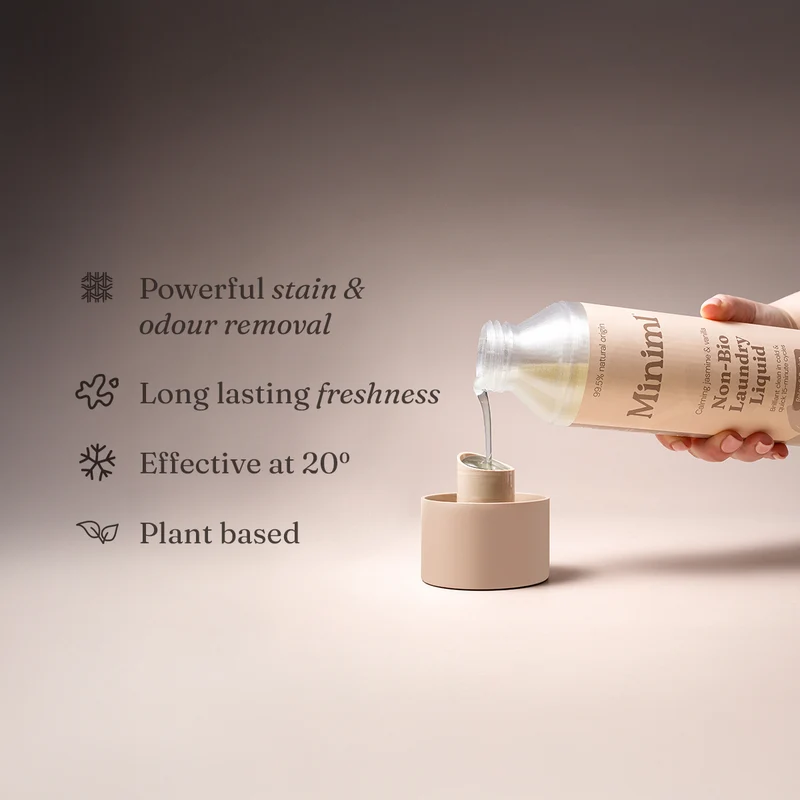

Miniml Laundry Liquid is the ideal swap to keep on hand, for machine or hand washing, to remove dirt and stains, whilst being soft on skin. Made with biodegradable ingredients (including Yorkshire water – even the scents are naturally derived), these are vegan-friendly and not tested on animals, and sold in bottles that you can send back to be refilled!
These are concentrated, so a little goes a long way. At end of use, you can get the bottles refilled at stores that sell them, or use the QR code to send off empty bottles for refilling, and return.
The starter bottles are 500ml, and the refill bottles will last 165 washes!
To use, pour into machine dispenser (30, 50 or 50ml for light, medium or heavy loads. For hand wash, dilute 1 to 2 capfuls in a bowl of warm water. Submerge, and agitate the water and detergent with your hands, and soak items up to 30 minutes, before rinsing.
Choose from:
- Fresh Linen
- Tropical Coconut
Choose unscented laundry powder/liquid for pregnancy/nursing, and baby clothes/bedding and pet bedding. Launder synthetic fabrics in a microfiber filter (or hand-wash in sink filters)
For stains, use natural oxygen bleach (never mix bleach with vinegar). You don’t need fabric conditioner (it usually has palm oil and makes clothing flammable when tumble-dried).
Instead, add half a cup of cleaning vinegar to rinse cycle (or half a cup of bicarbonate-of-soda to wash cycle.
The Refill Revolution
Where to recycle toxic laundry products
You can recycle empty bottles at kerbside. For products leftover, don’t pour down drains, take them to your council’s hazardous waste department.
Friendly Soap eco laundry powder is a nontoxic formulation that leaves behind no harmful residues. One box should last 25 washes.
Free from palm oil (avoid the scented stain bar near babies or pets).
Choose unscented laundry powder/liquid for pregnancy/nursing, and baby clothes/bedding and pet bedding. Launder synthetic fabrics in a microfiber filter (or hand-wash in sink filters)
For stains, use natural oxygen bleach (never mix bleach with vinegar). You don’t need fabric conditioner (it usually has palm oil and makes clothing flammable when tumble-dried).
Instead, add half a cup of cleaning vinegar to rinse cycle (or half a cup of bicarbonate-of-soda to wash cycle.
Where to recycle toxic laundry products
You can recycle empty bottles at kerbside. For products leftover, don’t pour down drains, take them to your council’s hazardous waste department.
Why laundry powder?


