
How to Help Cute Spiders (useful, not scary!)
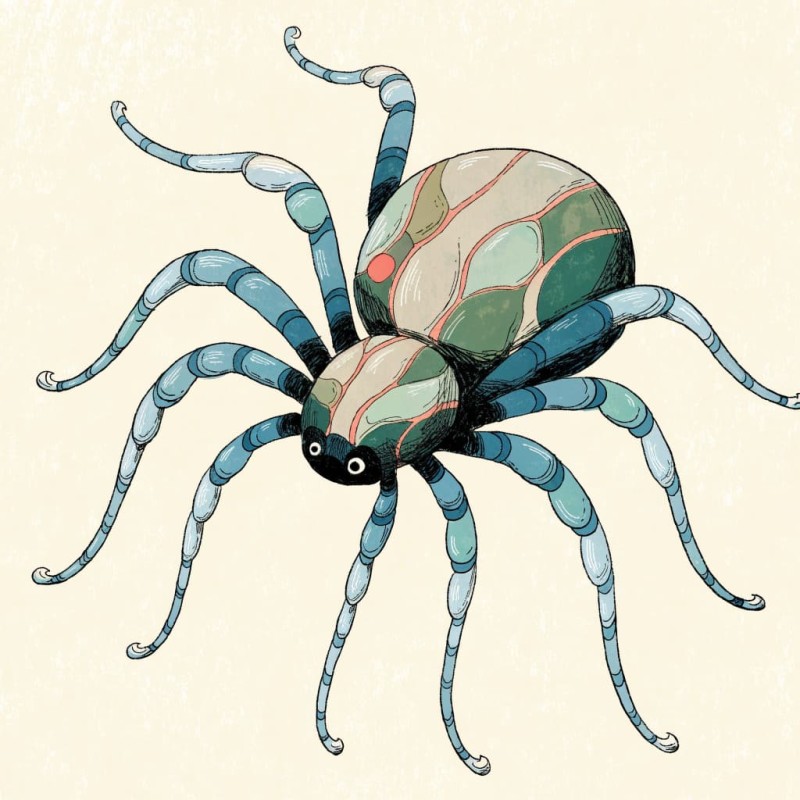
There are over 50,000 species of spiders worldwide, and they all play vital roles in our ecosystems. And the vast majority are also completely harmless to humans. In fact, they tend to help by eating up other creatures like flies.
James O’Hanlon teaches how spiders balloon through the air to avoid you, make elaborate webs and perform colourful dances for hunting.
The Little Book of Spiders is an illustrated book by a spider biologist. Learn what spiders are and how they live, eat and spin webs. Also learn how they mate and overpower prey with venom. And an (almost) vegetarian spider!
Britains’ spiders alone eat more than the weight of the human population in insects each year. They are nature’s pesticides.
How to help spiders

In the garden, don’t look at insects through a magnifying glass, this can heat up and kill them.
Humanely deter unwelcome spiders
- To prevent spiders appearing in your house, use biodegradable non-scented cleaners and vacuum regularly, to deter ‘stale air’. But don’t sweep up or hoover up existing spiders.
- Woodland Trust has a guide to 10 common spiders, to tell which are house or garden spiders. This is important, as house spiders should be left alone (or moved to a cupboard or shed) as most will not survive outside. Learn more at British Arachnological Society.
- If you have to remove a spider, gently cover it with a cup, slide a thin card underneath and place in an unused room or cupboard (or in the garden only if it’s a garden spider, see above).
- Spiders in baths don’t come up through plugholes. Place a towel on the bath edge, so they can climb out (leave a towel draped overnight, so spiders can climb out if they fall in). Or place a tumbler or cup over the spider, and slide a postcard in between (to trap and release).
- If with egg sacs, use a soft paintbrush or long tweezers to gently guide mother away from sac into a small paper bag so she does not panic. Free the silk attachment by carefully sliding a piece of paper, thin card or small cup underneath the sac, then use scissors or a knife to cut threads close to the anchoring surface (don’t pull). Place the sac in a soft-lined container or breathable box, then transfer both to a quiet protected area (outbuilding, shed, garage – or under dense vegetation for outdoor spiders) at a similar height/humidity level.
- Spiders in baths don’t come up through plugholes. Place a towel on the bath edge, so they can climb out (leave a towel draped overnight, so spiders can climb out if they fall in). Or place a tumbler or cup over the spider, and slide a postcard in between (to trap and release).
Found an exotic spider?
- Sometimes foreign spiders end up elsewhere on imported fruit or luggage, a few are escaped pets (like tarantulas).
- If you find one, call British Arachnological Society for advice. It may advise you contact Environmental Health Department (or a natural history museum). Consult a doctor if bitten.


