
How Street Trees Improve Air Quality in Towns
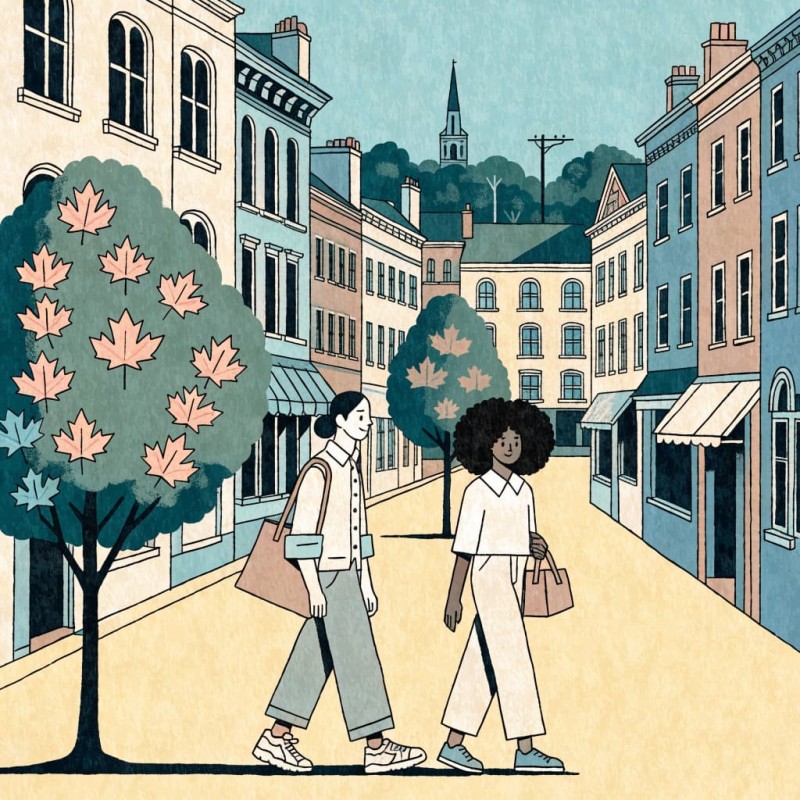
Yet unlike say in Canadian cities and towns, English councils don’t plant nearly anywhere near the trees they do over there. They have whole ‘street tree programs’, where the trees are planted by councils, then local people agree to ‘look after the trees’.
With regular watering and care, and reporting to the council, at the first sign of any disease of damage. Millions of trees have been planted, which of course also gives out more oxygen and reduces carbon dioxide emissions, which helps also to prevent carbon emissions.
London has more trees than people (around 9 million). But how many of these trees are on public streets, is less clear.
Care must be taken to avoid foliage near glass, to help stop birds flying into windows.
Read more on no-dig gardening and humane slug/snail deterrents. For public areas, read up on pet-friendly gardens (some trees and conkers are not safe) and avoid netting. Also know trees to avoid near horses (including yew, oak and sycamore).
Mostly in London, keep away from grey/white caterpillars (oak processionary moths) that can cause allergies and breathing difficulties – call a doctor or vet if you come into contact. These trees are cordoned off from horses and livestock (report to your local council and Treealert.
Help your community to plant trees
If the above has inspired you to get involved, contact Trees for Cities, an organisation that can help set up tree-planting programs in your area. You can use the app to see if your council has already signed up. If not, then choose a park or street, then get into action!
The Orchard Project began in London, but now trains volunteers nationwide to plant (and care fore) trees to provide free fruit and nuts for communities. This also helps to restore veteran orchards and create wildlife habitats (leave some fruits for the birds!)
Incredible Edible began in Yorkshire, and is now a worldwide movement to grow and provide free food for communities. Grow herbs at railway stations or vegetable gardens in schools. Local people can help themselves to local fruits off trees, when they want to make a pie!
The Dutch city of Maastricht is lined with enormous trees (the local park is known as The Green Carpet). The trees provide habitats for pipistrelle bats, common swifts, house sparrows and pollinating insects. Road safety has improved, along with air quality and reduced noise pollution.
Trees for Cities (tree watering-champions!)
Sign up at Trees for Cities and give your local tree around 50 litres of water, pouring slowly into the base, to let it soak into the soil. Water at night or early morning, to minimise evaporation and let the roots take in the optimal amount of water. Adding (pet-safe) mulch also helps to retain moisture.
Trees for Streets (sponsor local trees)
Trees for Streets is a scheme for residents, businesses and councils to plant more street trees. Every £1 spent saves £7 in health, environmental and energy costs. It also runs crowdfunding to plant a cluster of say 20 trees on one street.
Each planting scheme is on land owned and managed by local councils. They plaint, own and maintain the trees, the scheme is to raise money to plant them. Your council must survey the location and verify approved schemes.
Why plant more trees in England?
England has around 60 species of native trees, including English oak (Major Oak in Nottingham’s Sherwood Forest is around 1000 years old, and sadly is nearing the end of his life).
The nation cried when eco-vandals chopped down Northumberland’s Sycamore Gap (now shoots are signing signs of recovery) and we also have many other native species.
Trees in forest ‘talk to each other’ through an underground web of fungi, to share essential nutrients, and even warn neighbouring trees of possible inset attacks!
English trees do all kinds of wonderful things from preventing floods and heatwaves, providing homes to birds and mammals. And some trees (like holly) even use their tiny leaf spines as mini-lightning conductors to protect landscapes from lightning. Holly is toxic to pets, horses and livestock.
England has millions of trees (over 8 million alone in London, classifying the city as an urban forest). However England has lost most of its ancient woodland, which is why there are campaigns to preserve remaining trees. And get involved in tree planting campaigns, especially in urban areas.
Planting trees in town and cities helps to prevent floods, buffers wind, helps reduce urban heat island effect.
Trees for Life (in the Scottish Highlands)
Trees for Life is a lovely non-profit. Ideal for memorials, you can donate to plant a tree in honour of a beloved human or animal friend. You don’t get a plaque (and you can’t visit your tree). But know that the planting will provide food and shelter for wildlife for decades to come.
Ecosia (a search engine that plants trees)
Switch to Ecosia search engine (it’s free). Used by 20 million people worldwide, sponsors help to plant trees (this is now the largest tree-planting organisation in the world). It produces fast private results, and only takes a minute to switch over!
Hyde Park, Ava Lily
With more trees than people, the city of London is officially an urban forest. And the person to teach you all about them is Paul Wood.
His book London’s Street Trees looks at all the major species, from common planes to winter-flowring cherries to shocking pink-flowering Toona senensis. Buy a signed copy if you want from the author.
Although London is famed for its historic buildings and busy streets, sometimes its street trees are overlooked. Plane trees often line grand avenues, and many terraced houses are graced by limes and rowans.
As well as softening urban landscapes, they help to reduce urban heat island effect, and provide homes and food for birds and wildlife. They also buffer wind, help to prevent floods and cool the air. Trees are brilliant!
However, you do find in London that some areas are more tree-heavy than most. And this can often be due to lazy town planning. Less affluent boroughs could do with more more street trees.
Read up on pet-friendly gardens (some trees and conkers are not safe) and trees to avoid near horses (including yew, oak and sycamore).
Keep away from grey/white caterpillars (oak processionary moths) that can cause allergies and breathing difficulties – call a doctor or vet if you come into contact. These trees are cordoned off from horses and livestock (report to your local council and Treealert.
Plane trees (London’s most common street trees)
Plane trees are by far the most common street trees in London. Their broad canopies give shade in summer and they are an important part of the city landscape. Often because they are able to tolerate urban conditions.
Again, Paul Wood has an excellent piece on London’s plane trees.
They became popular in the 19th century as they proved unusually resilient against pollution from coal fires and factories.
These trees can also grow to 30 metres, with huge spreading crowns that give a huge amount of greenery in small spaces. However care must be taken for the big root systems to not block drains from fallen leaves. But as we face hotter summers, their large canopies are doing lots of help cool cities.
What Is London’s urban forest?
The term ‘urban forest’ describes all the trees and associated vegetation within a city. It includes far more than traditional woodland.
In London, the urban forest encompasses everything from enormous trees in historic parks to young street trees planted beside pavements. It includes woodland, private gardens, school grounds, churchyards, allotments, railway embankments and trees growing along waterways.
Some trees are immediately visible. Others are tucked away in gardens or behind buildings. This makes London’s urban forest remarkably diverse.
The capital is home to millions of trees, and they play a major role in the character of different neighbourhoods. In some parts of London, leafy streets can feel almost rural. In others, mature trees may be sparse and greenery limited to small parks or isolated street trees.
Mapping helps reveal this uneven distribution.
It allows researchers and planners to move beyond the question of how many trees London has and start asking more useful questions: Where are they? What condition are they in? Which communities benefit from them? Where are there gaps? And how can the existing canopy be protected?
Why map London’s trees?
At first glance, mapping trees might sound like a simple exercise. Locate a tree, record its position and move on to the next one. In reality, modern tree mapping can involve a huge amount of information.
A useful tree map might record a tree’s species, size, age, health, location and ownership. It may also consider the surrounding environment, such as nearby buildings, roads, parks and other vegetation.
The resulting data can help councils and environmental organisations make better decisions.
For example, if a neighbourhood has very little tree canopy, planting new trees could become a priority. If another area has a large population of mature trees, protecting those trees may be more important than simply planting replacements.
Mapping can also reveal connections between green spaces. A row of trees along a road may appear insignificant when viewed individually, but it can form part of a wider ecological corridor connecting parks and gardens.
The work of tree experts is therefore not simply about creating attractive maps. It is about creating information that can influence the future of the city.


